Food Sovereignty

Toolkits & Reports
Toolkits and reports that are created within the food sovereignty work will be uploaded here as they become available. If you are looking for specific materials that are not available below, please reach out to maria.montoya@treaty3.ca.
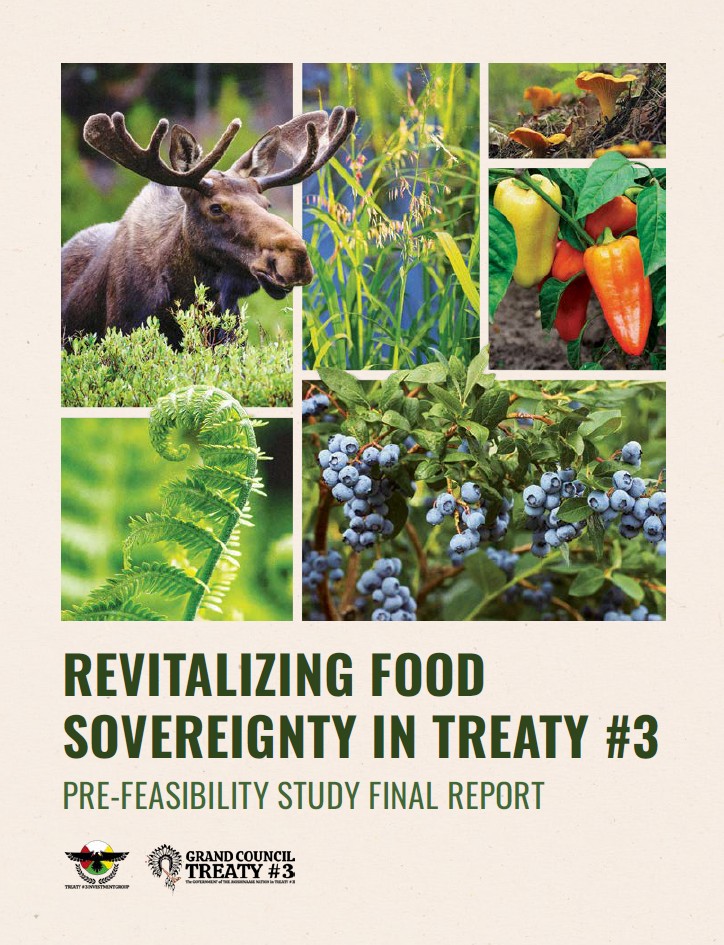
The Agri-Food Economic Blueprint
The Agri-Food Economic Blueprint supports Treaty #3 in building a self-sufficient, culturally grounded, and resilient agri-food system that advances food sovereignty, local economic development, and community well-being in the territory.
It is based on community engagement and identifies key priorities for strengthening local food systems through infrastructure, cultural revitalization, governance, and youth engagement.
Next Steps
The long-term implementation of the Agri-Food Economic Blueprint focuses on strengthening food sovereignty, local infrastructure, and community-led economic development across Treaty #3. This work revitalizes traditional food systems such as wild rice harvesting, hunting, fishing, and Indigenous seed saving, while expanding year-round food production through greenhouses, hydroponics, and community-based processing hubs.
The Blueprint also prioritizes building local capacity by supporting youth education, land-based learning, and Elder-led mentorship to develop skills for future agri-food careers. Overall, the Blueprint aims to improve food security, create local employment, support cultural revitalization, and build a more resilient and self-sustaining food system across Treaty #3.