Gaagiidoo-Ikwewag (Women’s Council)
The Gaagiidoo-Ikwewag (Women’s Council) within the Anishinaabe Nation of Treaty #3 represents the unique needs and aspirations of Anishinaabe women in the territory.
Women’s Council Representatives
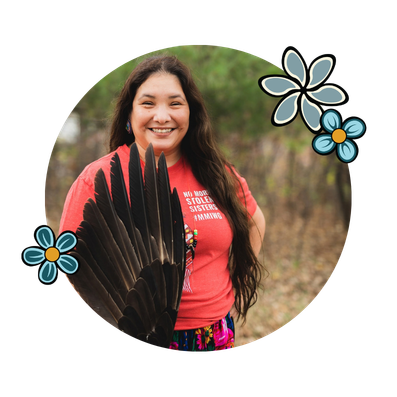
Crystal Harrison Collin (East)
Crystal Harrison Collin is an Anishinaabe Ikwe and member of Wabigoon Lake Ojibway Nation in Treaty #3 territory. Her late mother, Lillian Harrison, was from Wabigoon Lake Ojibway Nation and raised Crystal in Dinorwic, Ontario. Her father, Donald Kelly Sr., is from the Ojibways of Onigaming. A wife, mother, and grandmother, she is committed to strengthening connections between generations through language, culture, and education.
Crystal serves on the Grand Council Treaty #3 Executive Women’s Council and is the Programs and Services Manager with Lac Seul First Nation’s Prevention Department. She holds an Honours Bachelor of Arts with a major in Indigenous Studies and a minor in History. Her work in community engagement, cultural programming, and wellness is guided by a commitment to language revitalization and to supporting women, children, and families.
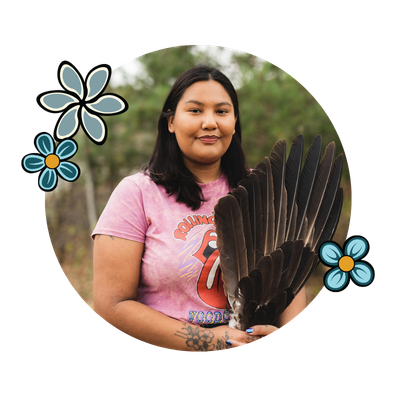
Brittany Cobiness (West)
Brittany Cobiness is a proud Anishinaabe Ikwe from Buffalo Point First Nation and is from the Omasjkooz (Elk) Clan. She serves as the Western Representative on the Grand Council Treaty #3 Gaagiidoo-Ikwewag Women’s Executive Council.
As a mother of three, Brittany believes leadership comes with a responsibility to listen to the people, remain accountable, stand up for justice, and protect our lands, waters, and future generations.
She has worked closely with grassroots people for many years and has been involved with the American Indian Movement since she was 19. She continues to support and advocate for women, children, families, communities, and future generations throughout Treaty #3 territory.
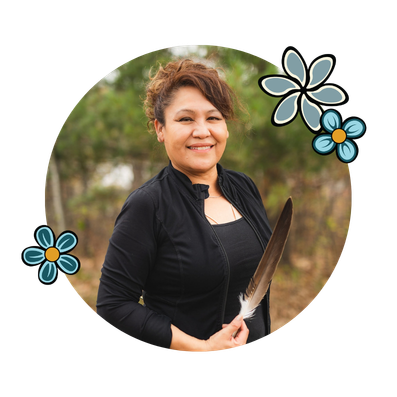
Pam Big George (South)
Naawekamigok nindizhinikaaz, Adik dotem. Pamela Big George is my English name, and I am a member of the Grand Council Treaty #3 Women’s Executive Council Gaagiidoo-Ikwewag, representing the south. My home community of Naongashiing is located on the south shores of Lake of the Woods. I have spent the last 20+ years working, advocating within the Child Welfare and Health sectors. I am a graduate of the University of Winnipeg and University of Manitoba. I believe in living the good life “mino-bimaadiziwn” is third degree Midewiwin and pipe carrier. I also believe in carrying good energy and a positive attitude which is meant to encourage and inspire others. I value my friendships and believe in maintaining strong family ties. In my free time, I love reading, writing, travelling, being in the bush or by water, and volunteering.
“I believe that the heart of our nation lies within the strength and unity of our women, we are the life-givers, knowledge keepers that solidifies every one of our circles and is integral in carrying us into the future”.
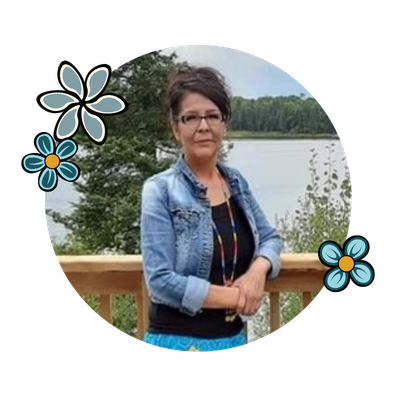
Rhonda Fisher (North)
I am a proud member of Wabaseemoong Independent Nation, and for the past 30 years I have made Niisaachewan Anishinaabe Nation my home while continuing to stay connected to my home community
The work I carry for our children and families is deeply personal to me.
I grew up in the child welfare system and was adopted. Because of that experience, I did not have the opportunity as a child to fully learn our traditional and cultural ways, our language, or many of the teachings that connected me to who I was and where I came from.
Today, I am a grandmother who has been caring for my four grandsons for the past 10 years. When I look at them, I understand even more strongly why our children need to know who they are, where they come from, and that they belong.
My professional work reflects that same commitment. I work with Niisaachewan in developing its own childcare law, and I am the Program Manager for FNCFS Community-Based Prevention. This is more than a job for me. I believe our Nations know how to care for our own children. We need to strengthen families, keep our children connected to home and culture, and prevent them from becoming disconnected through systems that do not always understand who they are.
As Gaagiidoo Ikwawag with Grand Council Treaty #3, I have tried to bring that experience and perspective to the table, particularly through my involvement in discussions surrounding the Ontario Final Agreement and the future of First Nations child and family services.
But my advocacy goes beyond child welfare. I will continue to use my voice for MMIWG2S+, our Nibi and lands, our children and youth, family violence, mental health, language, and the devastating impacts that drugs and alcohol continue to have on our families and communities.
These issues are connected. When our women are hurting, our families are hurting. When our families are hurting, our children feel it. And when we lose our connection to language, culture, land and Nibi, we lose pieces of what keeps us strong as Anishinaabe people.
I carry my voice as a woman from Wabaseemoong, as a grandmother, as a caregiver, and as someone who knows personally what it means to be separated from culture through the child welfare system.
I cannot change what I did not receive as a child. But I can use my voice today to help make sure our children do not have to grow up searching for those missing pieces of themselves.
I will continue to advocate—for my grandsons, for our women, our children and families, and for the generations yet to come.